Knowing a place is one of the few pleasures of life I revel in—arcadian, even in its uproar; a privilege that permits my gazing upon a world without the discomposure of lostness. This is how I feel about Amaraku. I remember Amaraku before my family moved from Lagos to Imo State in 2012. We were on holiday and had stopped by the market to greet my grandmother, popularly known as Nwanyịọcha, because of her “close call with albinism.”
Orie Amaraku is no longer as bustling a market as it was years ago. On market days, walking was a stiff and precipitous affair—pausing mid-zoom was a deadly sin. You might get hit by a wheelbarrow, or cussed out by an old woman with a basket of ukwa poised on her head. The people walked as though life was a piece of hot yam in the mouth of a child sharing a bowl with older, ravenous siblings.
It was years ago, and I thought the entire beast of commerce belonged to my grandmother. I was a proud little thing; a portrait of affluence hung on the walls of my puerile mind, and it showed. As we left the market to visit my uncles, I dug my hand into a man’s bag of rice and scooped half a handful, and walked away as he called after me. Atomic snob. Fortunately, there is an unspoken rule that grants the visitor leeway to be foolish; so he didn’t chase.
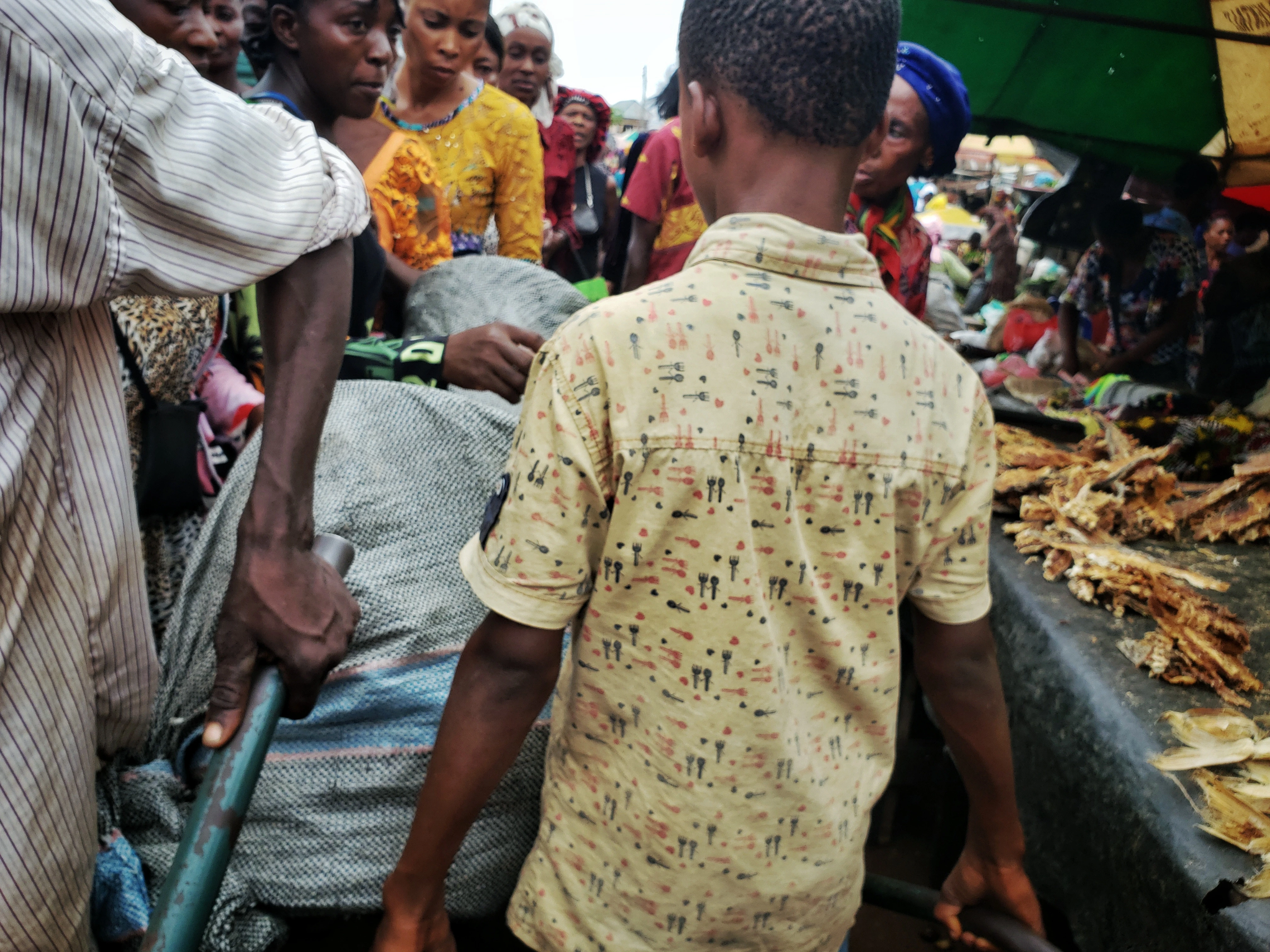
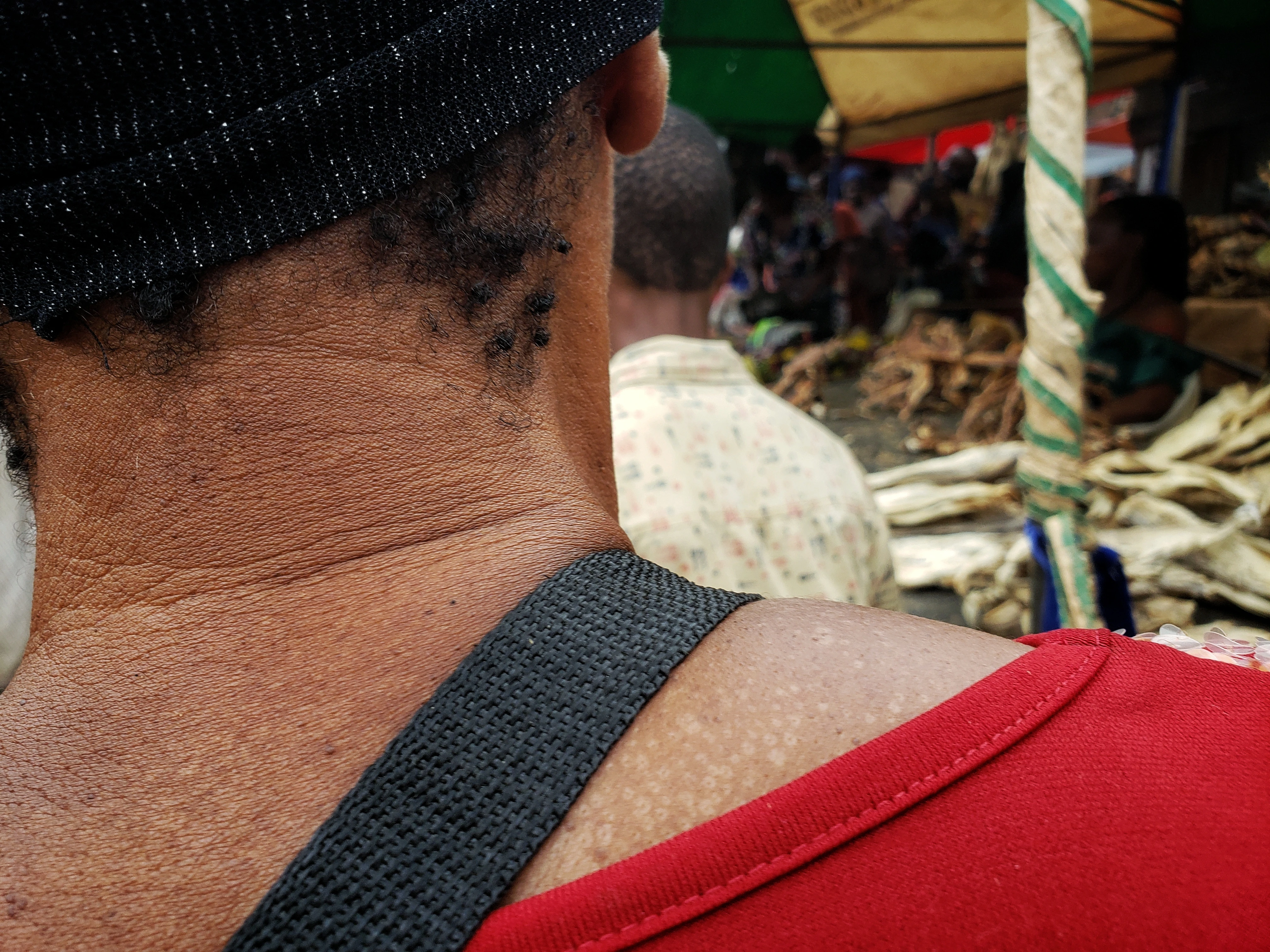
Ụwa bụ ahịa. The market is the perfect metaphor for life. Nothing pauses for nothing. If you fall, the crowd will move over you. The market is multiaxial, multifarious—an animal Pandora would be envious of. People swarm—people with entire histories etched into their skins, their vine veins—people pushing their sustenance; people who, like me, have come to watch the turbulence; angry teenagers who would rather be somewhere else than neck-deep in mountains of vegetable; people buying fake trinkets ₦300 a piece. Since I have long lost count of the market days, it is a delightful coincidence that the very day I choose to visit is a market day. It is also my mother’s birthday, so I stop at her stall to sing for her, Ada Nwaanyịọcha. She turns her back to the camera, places both hands on her waist, and smiles at her neighbor. The neighbor's grandchild, whom I can see at the far right, looks at me. Orie Amaraku is not where you come to buy smiles, but once in a while, an angel glides past and tickles a person or two.


If it remains a beast, it is wounded. Ask Orie Amaraku what it means to throng when your body is an ulcer. Ask if it remembers what it was before the government invaded with bulldozers, crushing head and limb, gut and groin. Orie Amaraku is now like a space after bombardment—the traders are shrapnel and bits of wood trying and failing to recover from vertigo. He, who once had a lock-up store, now makes do with a raggedy umbrella held down by a keg of sand. The shoemaker, who was once at the center of the market, now makes do with a nearly roofless shack at a far corner, inches away from a lake of refuse.
The bus park slowly recollects that it was once a park; the space widens again, but every market day like today, it brims with displaced traders. In the middle of the market is painful space. The beast moves without its heart.
A market is a paunch of paradoxes.
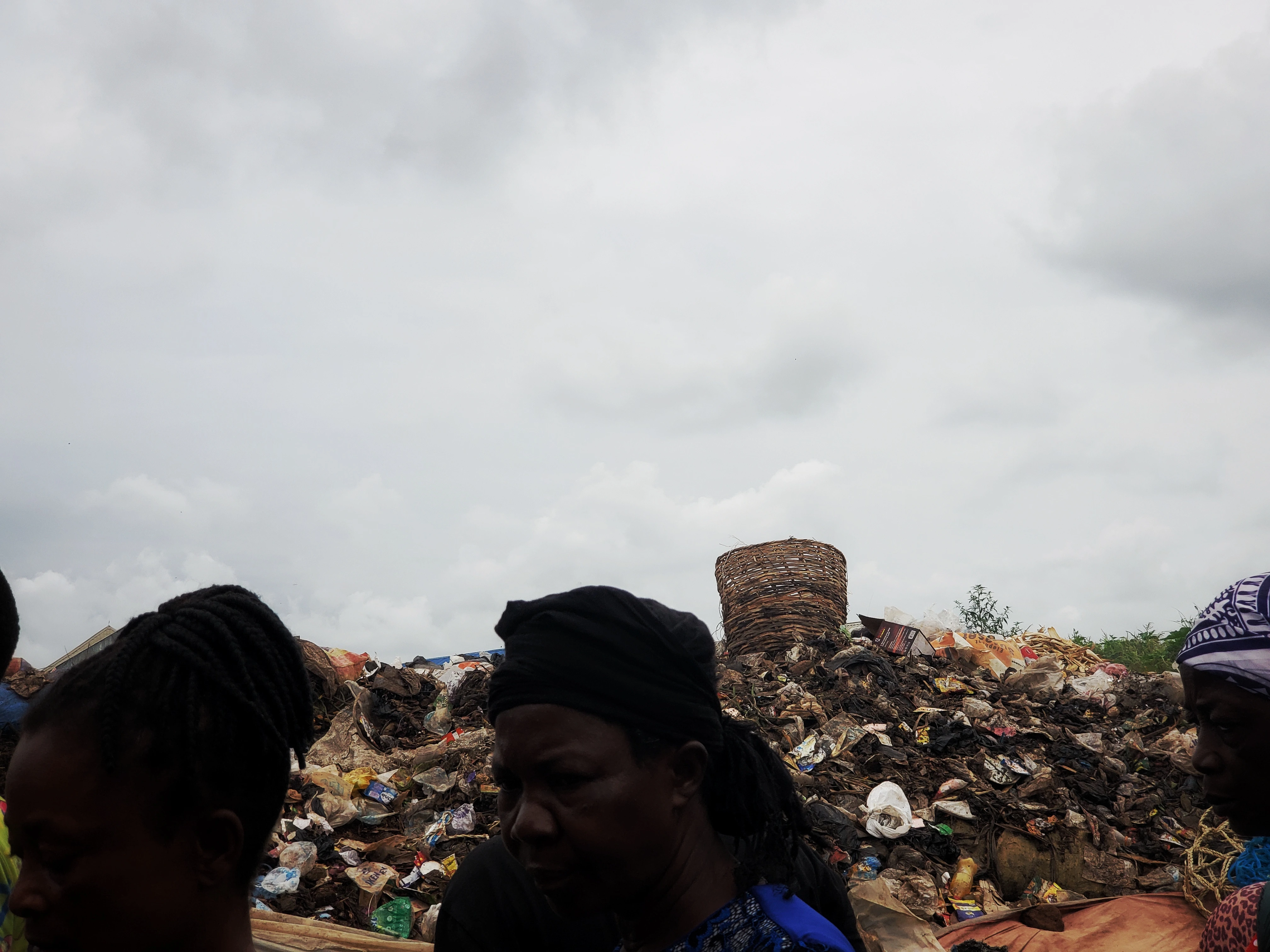
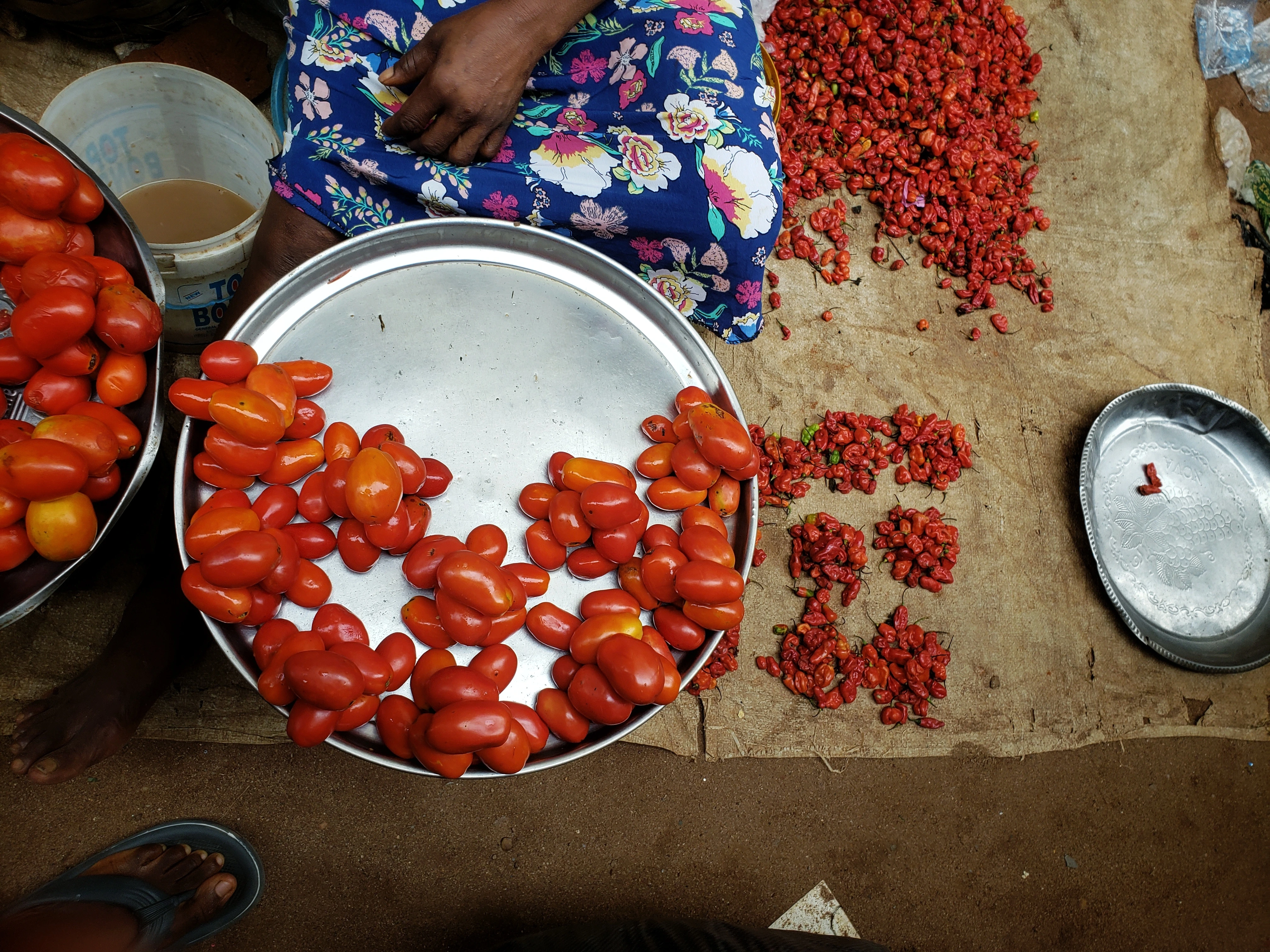
Colour exists beside the wan.
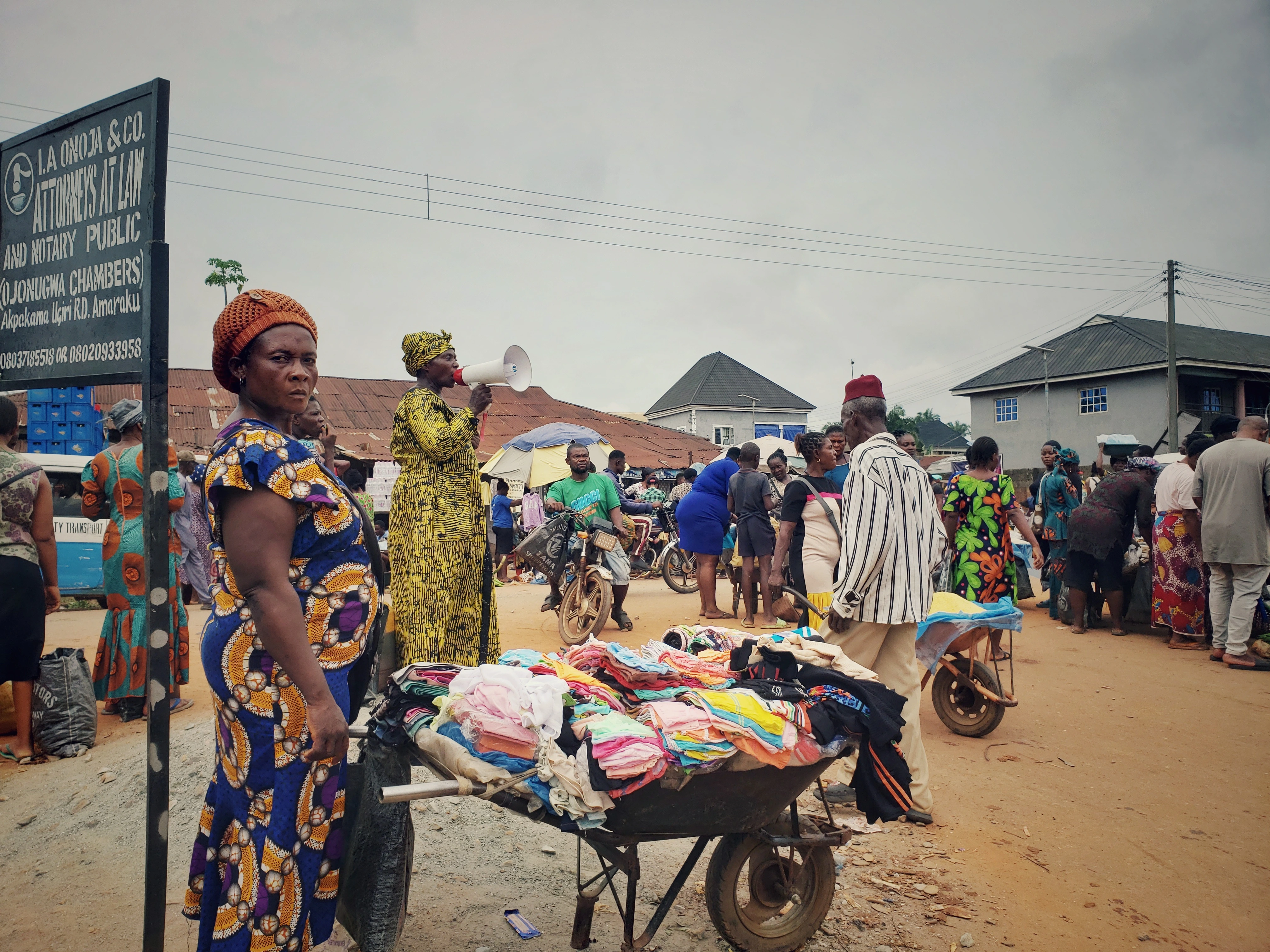
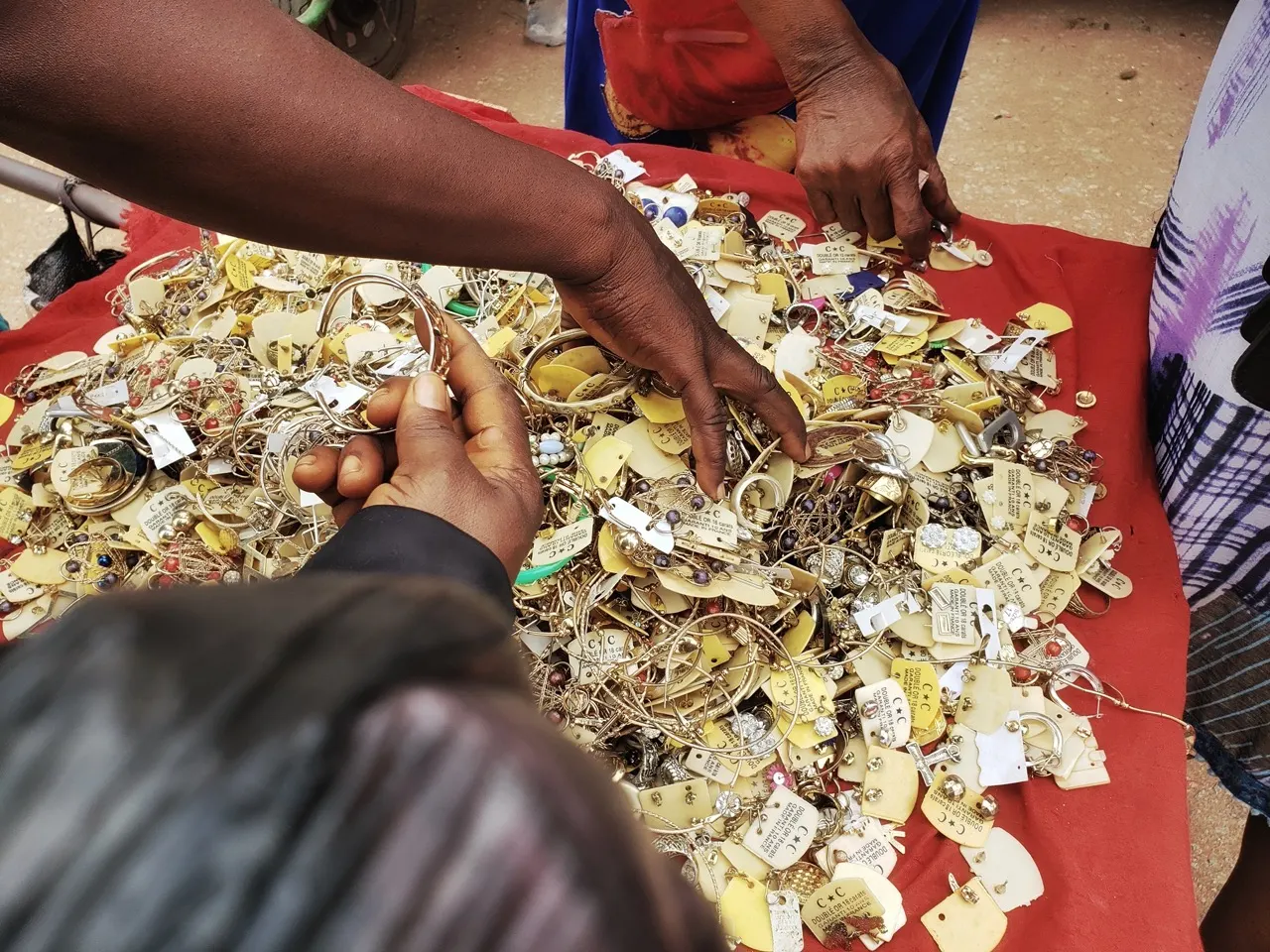
The gospel, beside the venal.
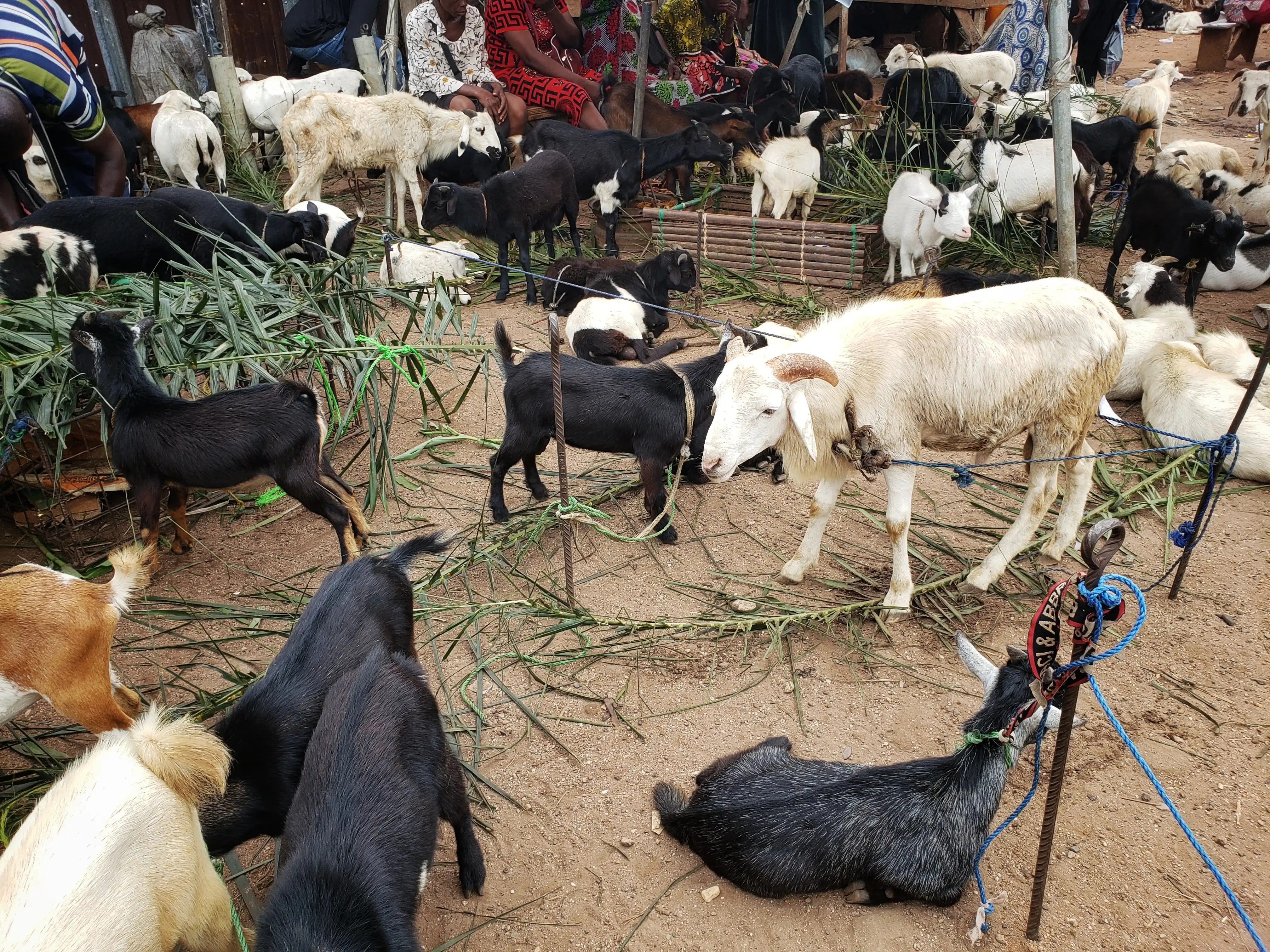
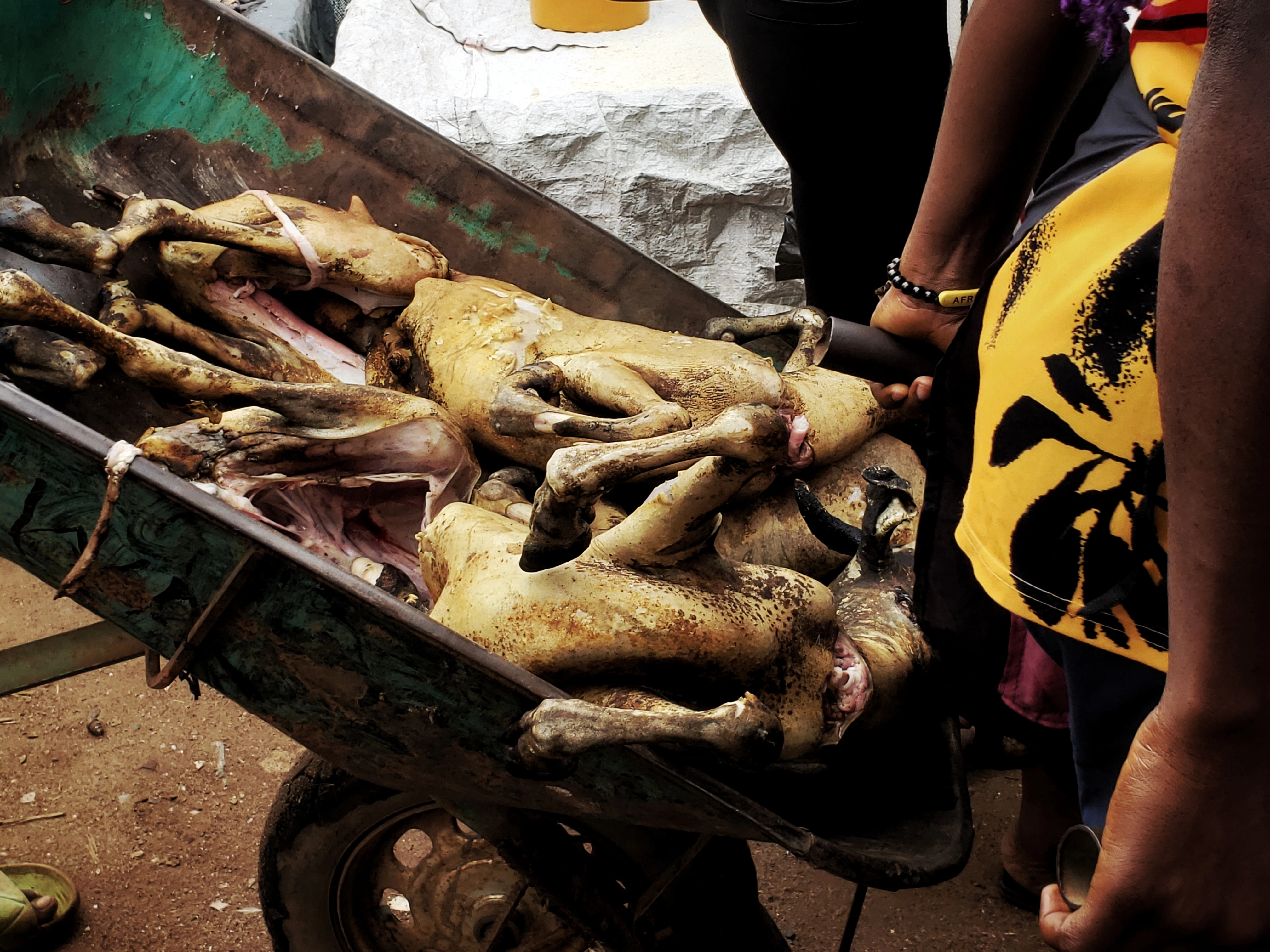
Many lives beside many deaths.
One rule about market days is to know where you’re going. There is little time and space to get lost. Little time and space to reconsider your steps before people fire snide remarks, “You’re in the market, move!” “Lee ka ọ n’eme ka Dumbee!” “Ụzọ!” “Ịsị esi lọ?” “Follow your foolishness out of my path!” Adjacent to this intolerance are the overeager cries of the traders calling out to passersby. On the stretch of Ugiri road, I once encountered a roaring woman with a wheelbarrow of beans. Now, she was not yelling like the others; she roared like a lion with a tail on fire; “Argghhh! Buy Beans! 350 ofụ cup. Arghhh!” With the strength she effused, she could have easily bullied a person into the purchase of a paint full.
Wheelbarrows are crucial to the market. For some people with small businesses, it is important to stay mobile. If the customer cannot come to you, you go to the customer. If they say run, you run. For some others, their wheelbarrows serve as their sole source of income—they wheel goods in and out of the market for as low as ₦300-1000, relative to weight and distance. Rumor has it that Daddiya, who is partially mad, bought a bag of rice on the Christmas holiday of 2024 with the money he earned from pushing his wheelbarrow. Next, they say, he might build a house.
The structures within the market are compact. Despite its fullness and the demolition of shops, nothing overflows. I wonder if this arrangement is as a result of unions, or a mercy to the buyers, or organic. Flanking the open area of Progress Line are the traders who deal in grain. If you move towards the main road you’ll find sellers of baby wear (babies’) and underwear, almost spilling into the hollow of the market. Further down Progress Line is a vision of soup; the meat sellers have curated an exhibition in their dark coves (they are sandwiched between the vegetables section and ramshackle salons), and you can hear them hacking away or sharpening their butcher knives against slightly curved knives for slicing. Kanda and anụ ewu. Beef. Tenderloin. But no chicken. There’s an entirely different section for chicken, where they are caged and killed upon purchase. There’s Ọgbọ Mmanụ, Ọgbọ Osisi, Ọgbọ Ewu, Ọgbọ Jị and Slaughter, where vultures swoop to kiss the red mud, and strip bones clean. In front of the yam section you’ll find cages of poultry and a litter of feathers, while at the end of Ugiri Road, where it splits like reptile tongue, you’ll see a group of women with one or two hens each, like extensions of their bodies.
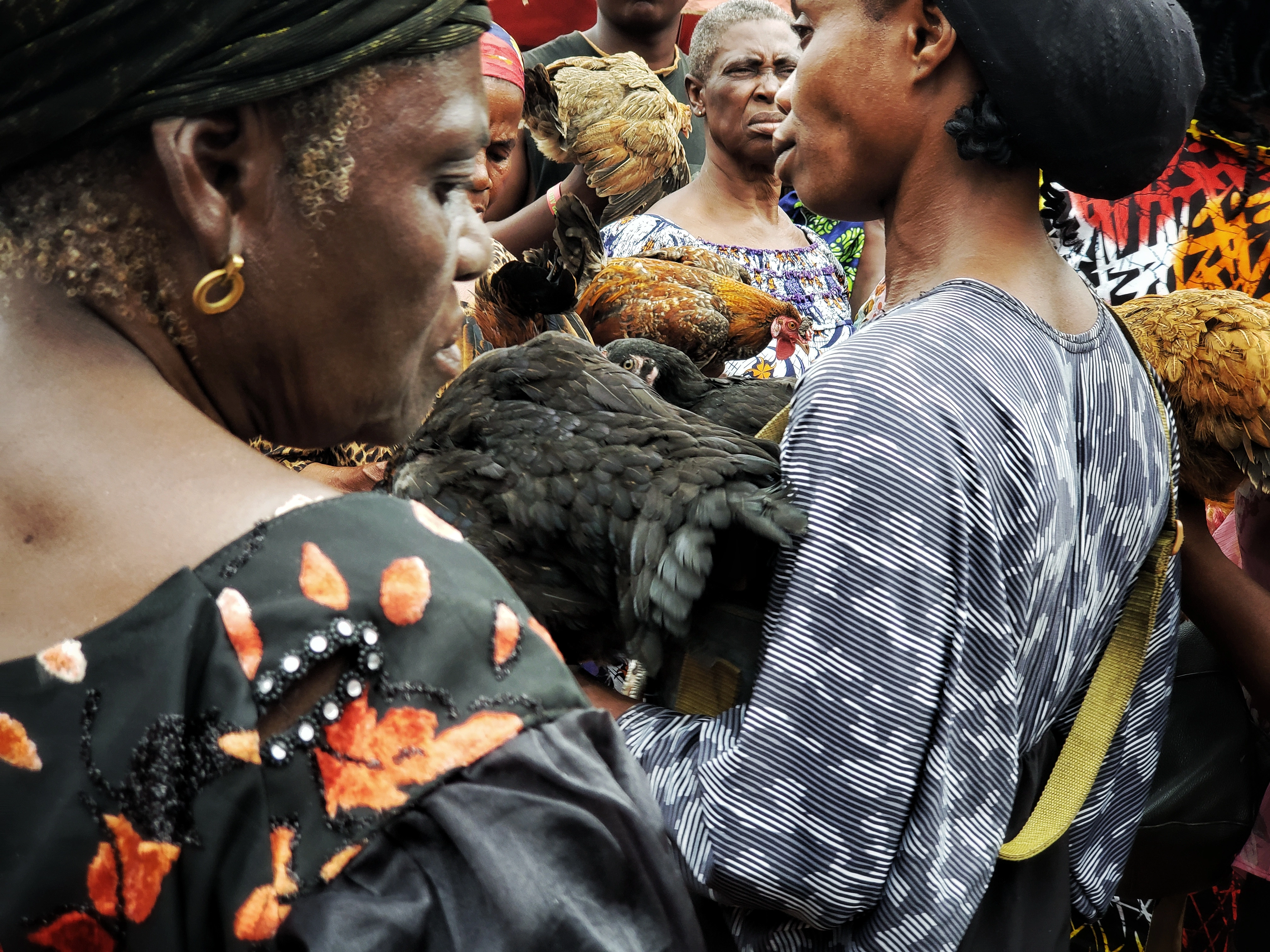
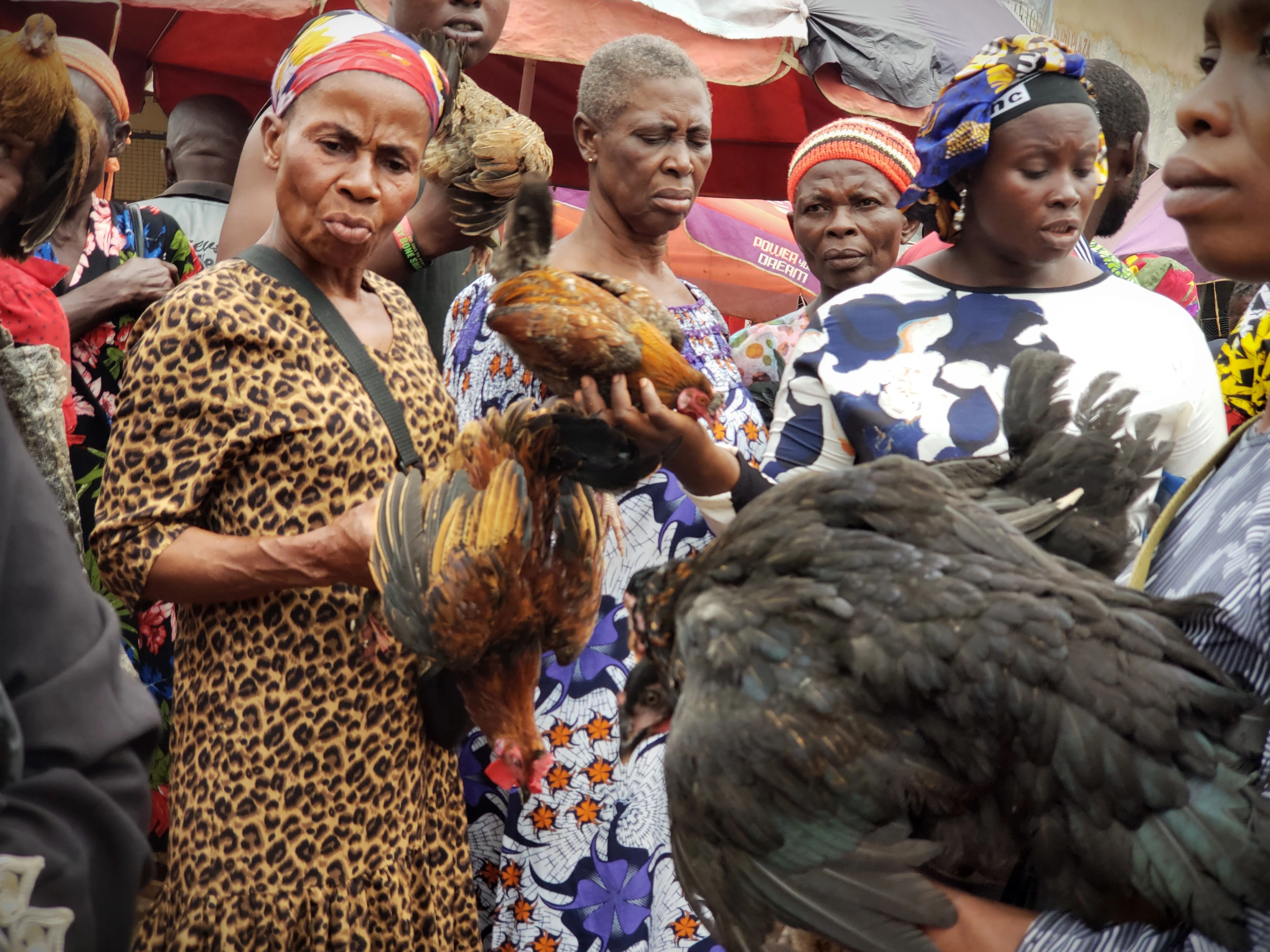
If you visit the market tomorrow, most of these standing people would have moved on to another market—some afọ in another community. They are the sojourners—they are not without a store because the government destroyed it, they never had one. These people either trade in palm oil, ukwa, livestock, fruit, or nylons. Their products are ever changing, and their supply is limited. If a person manages to pluck half a bag of mangoes today, they quickly count the markets to know where to go; if a person’s ukwa tree goes barren, they turn to the palm and plantain trees for answers. A person in urgent need of school fees might lead their unsuspecting, only sheep to wherever the market falls. Everything is money. A desperate bunch of oha leaves here; stolen oranges there.
If I return to the market tomorrow, the frenzy would have whittled down, people will be kinder and slower, and from time to time someone’s eyes will say, “I know this girl. She is the child of Nwaanyịọcha’s child—the niece of her uncles. She worked at Patience’s Shop. Don’t be a stranger.” Still, I look upon this world with wonder. I cannot outgrow the fascination of this psychedelia—a fascination that is labeled foolish most times, for what is there to gape at in a place devoid of luxury? Why concern yourself with banality when you can dream? Perhaps it is memory and some other unnamable thing that binds me to Amaraku. My body remembers as much as my mind does. My legs know the paths. My thighs are tickled by the memory of flood. My toes curl in commemoration of mud. The memory of Amaraku is the memory of mire and sediment between toes. It is the memory of capsized trucks in a flood, like bottle caps in a bowl of water. It is the memory of chicken pepper soup (my uncle’s specialty). It is the memory of cold coke and agidi jollof. It is the memory of my grandmother, who was fierce as she was kind. It is the memory of her silver hair wrapped in black threads. The Okada men at the mouth of the market have watched me grow—from primary school to present, from clothing style to clothing style—nobody asks, “Where are you going?” It’s always, “Let’s go.” I am everybody’s sister.
The new tarred road seems sturdier than the previous mishaps; although it still floods in the rainy season, it is less perilous.
During the COVID-19 lockdown in 2020, when I was apprenticed to a tailor in Amaraku, the rains were a constant nightmare. I had to go to work each day with my baby cousin. If she was awake by the end of a day’s work and it was not raining, we would both walk; If she was asleep I’d fasten her to my back with a wrapper and flag down a keke or a bike to transport us home. On that day, it rained fiercely without hope of ceasing; and to my great relief, she was asleep and peaceful. I borrowed an umbrella from a woman in the market and waded through the thigh-high raging flood, my sewing kit in my left hand. I proceeded slowly since the waves from passing vehicles were strong enough to make me lose balance and get pulled away. I was weary from a long day of pedaling. Two boys going home with half-empty trays of ubemgba motioned at me not to move in the direction I was going. They were small, perhaps made shorter by the rising water. They were gutters there; they said. I didn’t know where and where so they said they would lead me across, because they knew the place so well that if it was erased, they could draw it from scratch—every detail. No matter how well I claim to know this place, there are people who, without bursting their veins, know it better than I.